Reading tibeb: what the patterns on the border mean
Diamond, cross, star, zigzag, meander — the five patterns you'll find in almost every tibeb, where they come from, and how to choose.

Woven, not printed
Tibeb is the patterned border woven into shemma cloth on a hand loom. The weaver adds coloured threads — traditionally silk, now rayon or cotton — by hand, row by row. A wide, dense tibeb can take a week on its own, which is why it sets the price of a kemis more than anything else.
Diamond (አልማዝ)
The oldest and most common motif, a row of lozenges, sometimes nested. Neutral, goes with any occasion. If in doubt, choose diamond.
Cross (መስቀል)
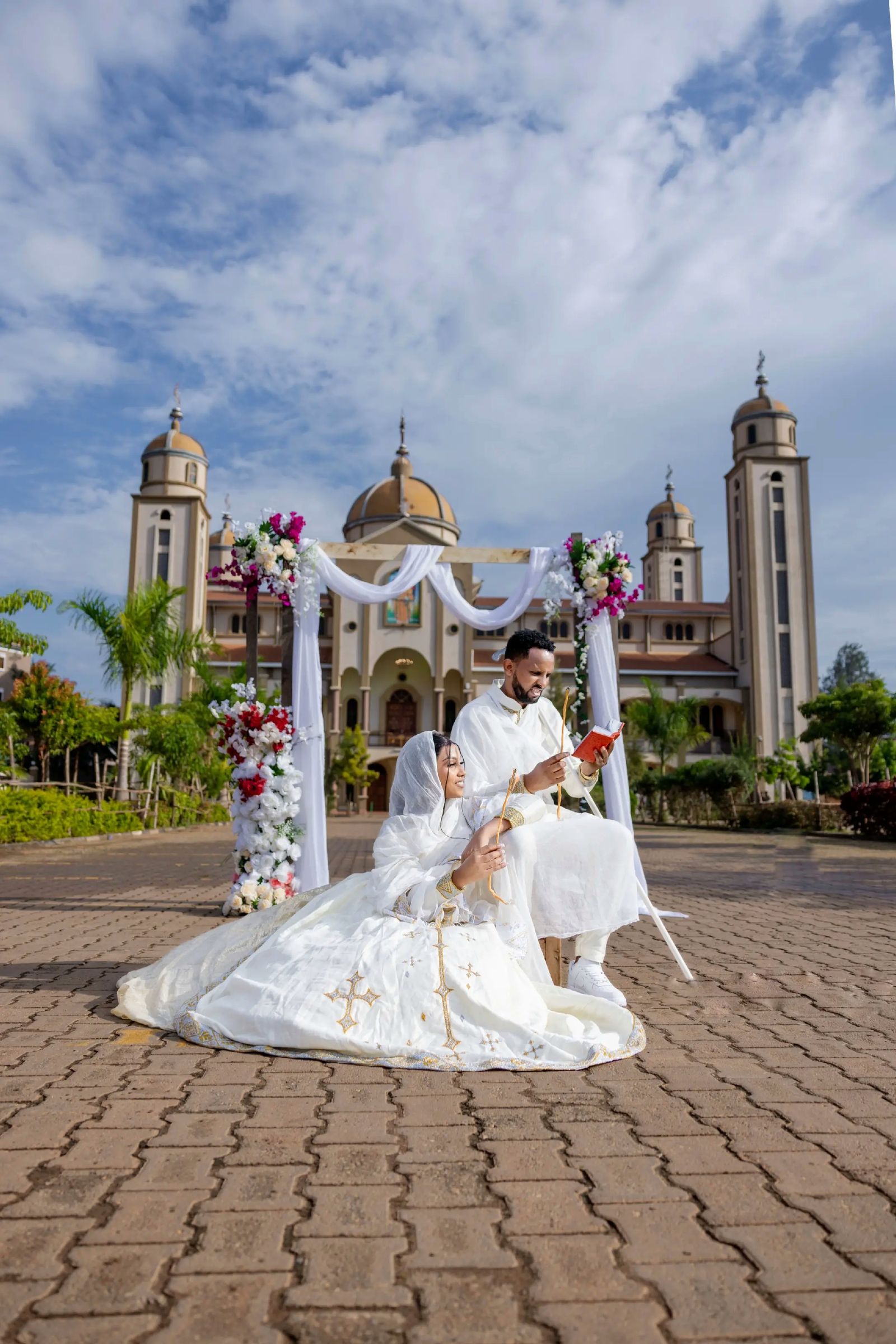
The Ethiopian cross in its many regional forms — Lalibela, Axum, Gondar. Worn for religious holidays and weddings; the most traditional choice.
Eight-point star
A Harari and Gurage favourite, bold and geometric. Reads as festive and modern at the same time. Popular for graduation and Enkutatash.
Zigzag
Light, playful, quick to weave — and therefore the most affordable. Lovely on children's dresses and everyday kemis.
Meander (ጠመዝማዛ)
The key pattern, borrowed from Axumite stonework. Formal and architectural; wonderful in a single dark colour on white.
Choosing colours
Gold is the constant. Pair it with green for Meskel and Genna, blue for Timket, red for weddings, purple when you want to stand out, and nothing at all — ivory on white — for Fasika.